Visiting Shenzhen Visa-Free in 2026: 30-Day Entry and the 240-Hour Transit, Explained
Two ways to visit Shenzhen without a Chinese visa in 2026 — the 30-day visa-free entry now covering 50 countries including the UK and Canada, and the 240-hour transit route for US passport holders.
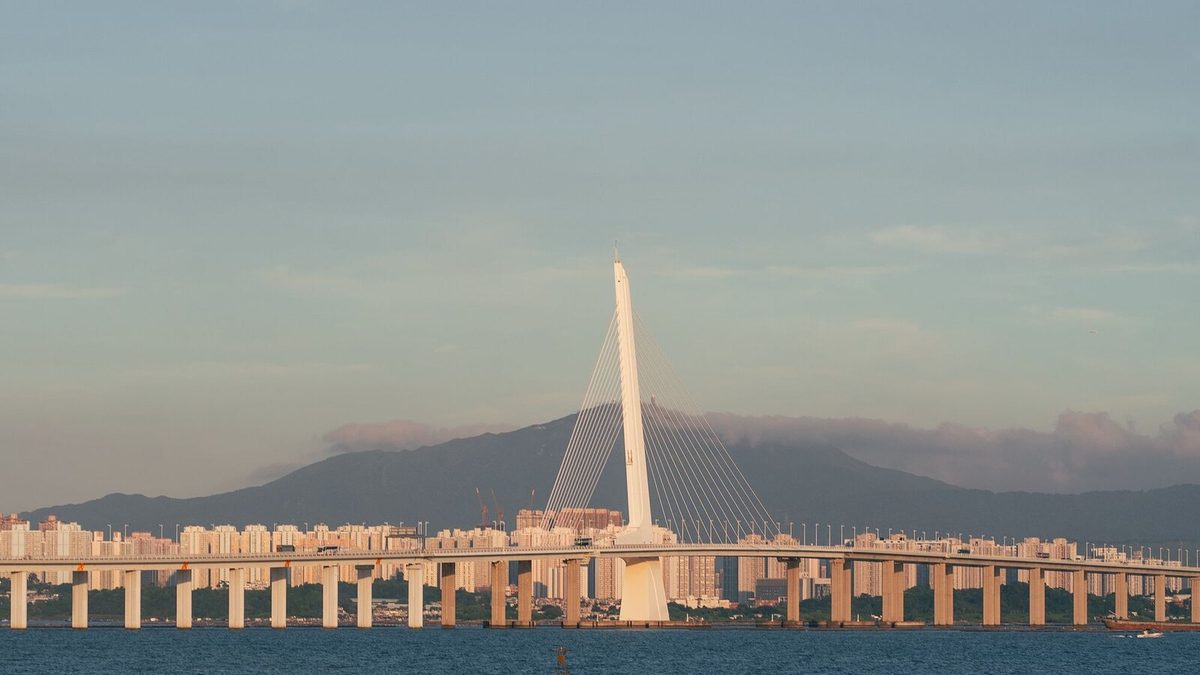
For most of the past decade, "I'd love to see China, but the visa process..." was a complete sentence. In 2026 it no longer holds. Depending on your passport, there are now two ways to walk into Shenzhen without ever visiting a Chinese consulate — and one of them gives you a full month.
Here's how both work, what changed recently, and the mistakes that still get travelers turned around at the border.
Route one: 30 days, no visa, no conditions to speak of
If you hold an ordinary passport from one of 50 countries, you can simply enter China visa-free for up to 30 days — for tourism, business, or visiting friends and family. No onward-ticket requirement, no transit condition. You can fly home afterwards.
The list covers most of Europe (France, Germany, Italy, Spain, the Netherlands, Switzerland, the Nordics and more), Australia, New Zealand, Japan, South Korea, and — since February 17, 2026 — the United Kingdom and Canada, which joined after years of being limited to the transit scheme.
The policy currently runs through December 31, 2026. Your 30 days are counted from midnight following your day of entry, so arrival day is effectively free.
If this is you, you can stop reading here and start planning — any entry port works, including Shenzhen Bao'an Airport, the high-speed rail from Hong Kong, and the land borders at Luohu or Futian.
Route two: the 240-hour transit — the American option
The United States is not on the 30-day list. For US passport holders (and a handful of others), the practical visa-free route is the 240-hour visa-free transit: up to 10 days in China, provided you're genuinely transiting — arriving from one country or region and departing to a different one.
The mechanics:
- 55 eligible nationalities, including the US.
- Enter through any of 65 designated ports. For Shenzhen, that means Bao'an Airport (SZX), the Shekou ferry terminal, or arriving on the high-speed rail — West Kowloon Station in Hong Kong was added as an eligible port in November 2025.
- Your permitted area covers 24 provinces, including all of Guangdong — so day trips to Guangzhou or Zhuhai are fine.
- The 240 hours start from midnight after your entry day.
The crucial word is third. Hong Kong and Macao count as separate regions from the mainland, which makes elegant itineraries possible: fly into Hong Kong, spend a few days there, cross to Shenzhen for up to 10 days, then depart to Macao, Tokyo, Singapore — anywhere that isn't Hong Kong again. What you cannot do is Hong Kong → Shenzhen → Hong Kong; that's not transit in the border officer's eyes.
The two routes at a glance
| 30-day visa-free entry | 240-hour visa-free transit | |
|---|---|---|
| Who | 50 countries (UK, Canada, most of Europe, Australia, Japan...) | 55 countries, including the United States |
| Length of stay | 30 days | 10 days |
| Onward ticket | Not required — round trips are fine | Required, to a third country or region |
| Entry ports | Any open port | 65 designated ports (SZX, Shekou, West Kowloon all included) |
| Where you can go | All of mainland China | 24 provinces, including all of Guangdong |
| Valid until | December 31, 2026 (announced) | Ongoing, list updated periodically |
What to have ready at the border
Whichever route applies, immigration will want:
- A passport valid for at least six months, with blank pages.
- For the 240-hour transit: a confirmed onward ticket to a third country or region, departing within your window. A screenshot of a booking "on hold" doesn't count.
- The China Online Arrival Card, introduced in late 2025 — fill it in online before you fly and save the QR code. It replaces the old paper form at most ports.
- Your hotel address (or host's address) for the first night.
Transit passengers are processed at a dedicated counter at Bao'an Airport. Allow a little extra time on your first entry; officers may ask to see the onward ticket and your rough plans, and a calm, boring answer is the right answer.
The mistakes that still catch people
- Assuming a US passport gets the 30-day entry. It doesn't — Americans need the transit route, with a genuine onward destination.
- Booking a round trip back to your entry point. Hong Kong in, Hong Kong out fails the third-region test. Departing to Macao instead solves it for the price of a ferry ticket.
- No confirmed onward seat. The single most common reason travelers are refused boarding by their airline before they even reach China.
- Treating the policy as permanent. Both schemes run on announced end dates and country lists that shift. Check the National Immigration Administration page in the week before you fly — we verify this article against it, but rules outrun articles.
- Planning to work or report. Both routes cover tourism, business meetings and family visits. Employment, study and journalism still require visas.
What ten days here actually looks like
Ten days is more than a stopover — it's enough to use Shenzhen as a base and let the entire Greater Bay Area open up on day trips, because the region is stitched together by some of the fastest transport on earth. You can be in another city by lunch and back for the Shenzhen skyline at night.
Everywhere in Guangdong sits inside your permitted area on either scheme, so these are simple there-and-back days:
- Guangzhou — 30–40 minutes by high-speed rail; Cantonese food, temples, the older soul of the province.
- Zhuhai & Zhongshan — since the Shenzhen–Zhongshan Link opened in June 2024, a ~30-minute drive straight across the Pearl River estuary, down from the old two-hour loop.
- Foshan — the martial-arts and ceramics heartland, a little over an hour away.
- Dongguan & Huizhou — factory-town energy and quiet coastline respectively, both an easy hop.
Hong Kong and Macao are the exception worth understanding. They're separate customs regions, so you don't casually day-trip there and back on the 240-hour transit — crossing into them counts as your exit. The elegant move is to let them bookend the trip: enter from Hong Kong, base yourself in Shenzhen, and depart via Macao — which is exactly the "third region" the transit rule asks for. (On the 30-day visa-free entry you have more freedom, but each crossing is still a full border.)
And — the part most visitors don't expect — Shenzhen is also one of the best places in Asia to fold a comprehensive health screening or a course of Traditional Chinese Medicine into the trip.
Even a quick first visit gives you the texture of the place — the old town, the malls, the unhurried pace between the towers:

Video: “china vlog — first time in shenzhen, upperhills shopping, nantou ancient city” by Via Li on YouTube
That's a two-day taste. Give it the full ten and the city stops being a checklist. However your passport gets you in, the border is the easy part now — the question worth planning around is what you do with the time.
Policy details above verified against official National Immigration Administration sources in July 2026.
Planning a trip to Shenzhen?
We arrange English-friendly health checkups, TCM sessions and cultural journeys — shaped into one private, seamless stay.